
 EN
EN


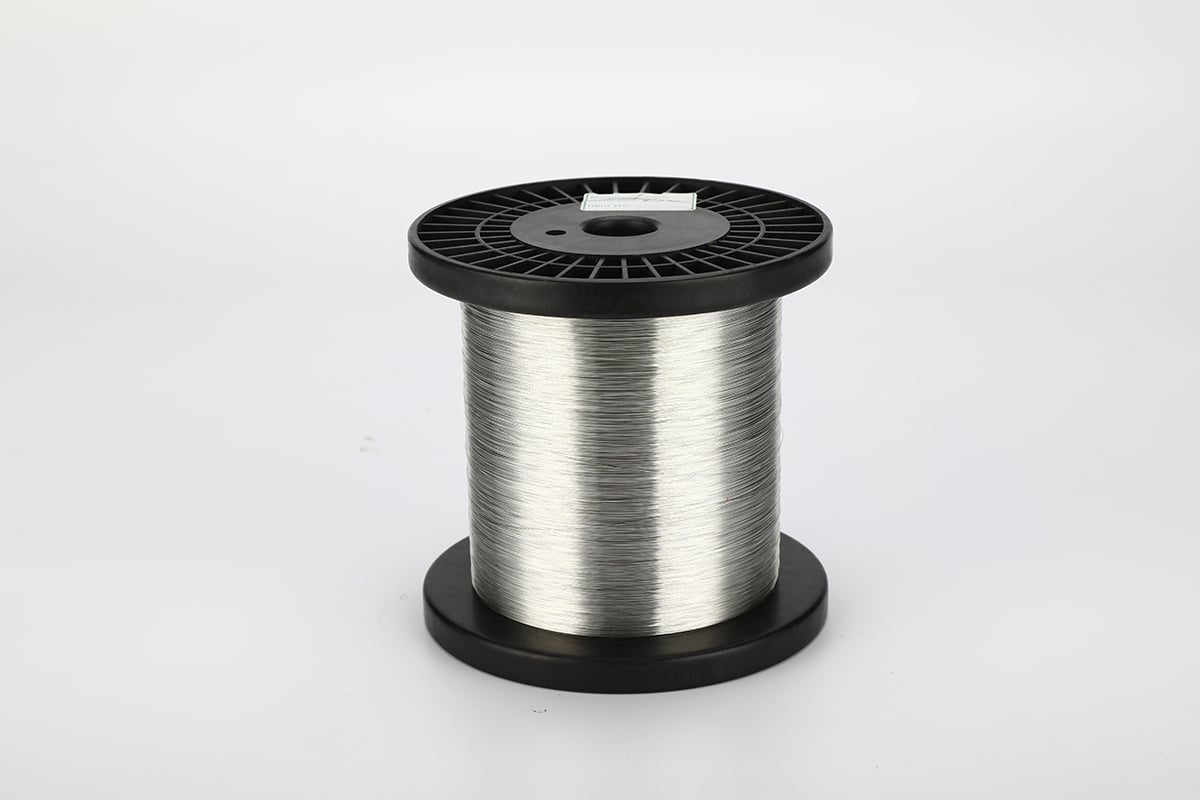
When selecting electrical conductors for modern infrastructure projects, engineers and contractors increasingly turn to innovative materials that deliver superior performance while maintaining cost efficiency. TCCS wire, or Tin-plated Copper Clad Steel wire, represents a breakthrough in electrical conductor technology that combines the conductivity advantages of copper with the structural strength of steel. This advanced conductor solution addresses the growing demands of telecommunication networks, grounding systems, and electrical installations where both electrical performance and mechanical durability are critical. Understanding the unique properties and applications of TCCS wire enables project managers to make informed decisions that optimize both performance and budget considerations.
Understanding TCCS Wire Construction and Technology
Core Material Composition and Manufacturing Process
The manufacturing of TCCS wire involves a sophisticated process that begins with a high-strength steel core, which is then clad with a layer of pure copper through advanced metallurgical bonding techniques. This copper cladding typically represents 10-40% of the total cross-sectional area, depending on the specific application requirements and performance specifications. The steel core provides exceptional tensile strength, often exceeding 1200 MPa, while the copper layer ensures excellent electrical conductivity approaching that of solid copper conductors.
The tin plating process adds another layer of protection and functionality to TCCS wire, creating a barrier against corrosion and oxidation that significantly extends the conductor's operational lifespan. This three-layer construction results in a conductor that maintains structural integrity under extreme mechanical stress while delivering reliable electrical performance across various environmental conditions. The precise control of layer thicknesses during manufacturing ensures consistent electrical and mechanical properties throughout the entire length of the conductor.
Advanced Metallurgical Bonding Technology
The bonding between the steel core and copper cladding in TCCS wire utilizes advanced metallurgical processes that create a permanent molecular bond rather than mere surface adhesion. This bonding technology ensures that the copper layer remains intact even under extreme mechanical stress, preventing delamination that could compromise electrical performance. The result is a conductor where the copper and steel function as a unified material rather than separate components.
Quality control measures during the bonding process include ultrasonic testing and microscopic examination to verify bond integrity throughout the conductor length. These rigorous testing procedures guarantee that TCCS wire maintains its specified electrical and mechanical properties under real-world operating conditions. The advanced bonding technology also prevents galvanic corrosion between the dissimilar metals, ensuring long-term reliability in various environmental conditions.
Electrical Performance Characteristics
Conductivity and Resistance Properties
TCCS wire demonstrates exceptional electrical conductivity characteristics that make it suitable for high-frequency applications and power transmission requirements. The copper cladding provides a low-resistance path for electrical current, with DC resistance values typically ranging from 30% to 60% of International Annealed Copper Standard (IACS), depending on the copper-to-steel ratio. This conductivity level proves adequate for most telecommunications and electrical applications while offering significant cost advantages over solid copper alternatives.
The skin effect phenomenon in AC applications actually enhances the performance of TCCS wire, as high-frequency currents tend to flow primarily through the outer copper layer. This characteristic makes TCCS wire particularly effective in RF applications and telecommunications systems where signal integrity is paramount. The tin plating further improves conductivity by preventing copper oxidation and providing a stable, low-resistance surface for connections and terminations.
Impedance Control and Signal Integrity
In telecommunications applications, TCCS wire provides excellent impedance control characteristics essential for maintaining signal quality over long transmission distances. The uniform copper cladding thickness ensures consistent electrical properties that minimize signal reflections and transmission losses. This consistency is particularly important in coaxial cable applications where impedance matching directly affects system performance and signal integrity.
The smooth surface finish achieved through tin plating reduces signal attenuation caused by surface roughness, particularly at higher frequencies. Laboratory testing demonstrates that TCCS wire maintains signal integrity comparable to solid copper conductors while providing superior mechanical properties. These characteristics make TCCS wire an ideal choice for critical communication infrastructure where both electrical performance and long-term reliability are essential requirements.
Mechanical Strength and Durability Advantages
Tensile Strength and Load-Bearing Capacity
The steel core construction of TCCS wire delivers exceptional tensile strength that significantly exceeds that of solid copper conductors, making it ideal for applications requiring both electrical conductivity and mechanical support. With breaking strengths typically ranging from 1200 to 1800 MPa, TCCS wire can support substantial mechanical loads while maintaining electrical continuity. This strength advantage proves particularly valuable in overhead installations, guy wires, and applications where the conductor must span long distances without intermediate support.
The superior mechanical properties of TCCS wire enable installations in challenging environments where solid copper conductors would be impractical or require additional structural support. Wind loading, ice accumulation, and thermal expansion effects that commonly cause failure in copper conductors are effectively managed by the steel core strength. This mechanical advantage translates to reduced installation costs and improved system reliability over the conductor's operational lifetime.
Environmental Resistance and Longevity
TCCS wire demonstrates exceptional resistance to environmental factors that commonly degrade electrical conductors, including moisture, temperature variations, and corrosive atmospheres. The tin plating provides an effective barrier against oxidation and corrosion, while the steel core maintains structural integrity under extreme temperature cycles. Field installations have documented service lives exceeding 25 years in harsh environmental conditions where conventional conductors would require replacement.
The thermal expansion coefficient of TCCS wire more closely matches that of steel support structures compared to pure copper, reducing thermal stress and mechanical fatigue in overhead installations. This compatibility minimizes the risk of conductor failure due to thermal cycling and extends the overall system reliability. Laboratory accelerated aging tests confirm that TCCS wire maintains both electrical and mechanical properties well beyond typical project design life requirements.
Cost-Effectiveness and Economic Benefits
Material Cost Advantages
TCCS wire offers significant cost advantages compared to solid copper conductors, with material costs typically 40-60% lower depending on copper market prices and specific conductor configurations. This cost reduction stems from the reduced copper content while maintaining equivalent electrical performance for most applications. The steel core contributes minimal cost while providing substantial mechanical strength, creating an optimal balance between performance and economy.
The cost stability of TCCS wire provides project managers with more predictable budgeting compared to solid copper alternatives, which are subject to volatile commodity pricing. Steel prices typically demonstrate less volatility than copper, providing more stable long-term material costs for large infrastructure projects. This price stability enables more accurate project cost estimation and reduces the risk of budget overruns due to material price fluctuations during project execution.
Installation and Maintenance Cost Reductions
The superior mechanical strength of TCCS wire reduces installation costs through decreased support structure requirements and simplified installation procedures. The ability to span longer distances without intermediate supports reduces material and labor costs for pole installations and underground conduit systems. Installation crews report faster deployment times due to the improved handling characteristics and reduced risk of conductor damage during installation.
Maintenance costs over the conductor lifetime are significantly reduced due to the enhanced durability and environmental resistance of TCCS wire. The reduced need for conductor replacement and repair translates to lower lifetime system costs despite potentially higher initial installation costs. Network operators report improved system reliability and reduced maintenance interventions in installations utilizing TCCS wire compared to conventional copper conductors.
Applications and Industry Use Cases
Telecommunications Infrastructure
TCCS wire has become the preferred conductor choice for modern telecommunications infrastructure, including coaxial cables, drop wires, and distribution networks. The combination of excellent RF performance and superior mechanical strength makes TCCS wire ideal for both aerial and underground telecommunications installations. Cable manufacturers increasingly specify TCCS wire for broadband and fiber optic support applications where both signal integrity and physical durability are critical.
In cellular network infrastructure, TCCS wire provides the strength and conductivity required for antenna feed lines and grounding systems that must withstand extreme weather conditions while maintaining signal quality. The consistent electrical properties of TCCS wire ensure reliable performance across the entire frequency spectrum used in modern wireless communications. This reliability has led to widespread adoption by major telecommunications providers for critical infrastructure deployments.
Power Distribution and Grounding Systems
Electrical grounding systems benefit significantly from the unique properties of TCCS wire, particularly in applications requiring both low electrical resistance and high mechanical strength. The steel core provides the structural integrity needed for buried grounding electrodes, while the copper cladding ensures effective electrical continuivity for fault current dissipation. This combination makes TCCS wire particularly effective in substations and industrial facilities where grounding system reliability is paramount.
Power distribution networks increasingly utilize TCCS wire for neutral conductors and guy wires that must carry electrical current while providing mechanical support. The ability to combine these functions in a single conductor simplifies installation and reduces overall system costs. Utility companies report improved system reliability and reduced maintenance requirements in installations incorporating TCCS wire compared to separate mechanical and electrical conductor systems.
Installation Best Practices and Technical Considerations
Proper Termination and Connection Techniques
Successful TCCS wire installation requires specific termination techniques that account for the multi-layer conductor construction and ensure reliable long-term connections. Standard copper termination hardware and techniques are generally compatible with TCCS wire, though special attention must be paid to ensuring adequate contact with the copper cladding layer. Proper preparation involves removing any oxidation from the tin plating and ensuring clean, tight connections that maximize electrical continuity.
Connection integrity testing should verify both electrical continuity and mechanical strength of terminations, particularly in applications where the connection must withstand mechanical stress. Installation crews should be trained in the specific handling requirements of TCCS wire to prevent damage to the copper cladding during installation. Proper tools and techniques ensure that the conductor maintains its specified electrical and mechanical properties throughout the installation process.
Environmental and Compatibility Factors
TCCS wire installation must consider compatibility with other system components and environmental factors that could affect long-term performance. The use of appropriate connection hardware and protection against galvanic corrosion ensures optimal system reliability in mixed-metal installations. Environmental factors such as soil chemistry, moisture levels, and temperature variations should be evaluated to select appropriate tin plating thickness and conductor configuration.
Installation planning should account for the thermal expansion characteristics of TCCS wire and provide appropriate mechanical stress relief in installations subject to temperature variations. The superior strength of TCCS wire allows for optimized support spacing and reduced infrastructure requirements, but proper engineering analysis ensures that these advantages are fully realized while maintaining system safety and reliability standards.
Comparative Analysis with Alternative Conductor Technologies
TCCS Wire Versus Solid Copper Conductors
When comparing TCCS wire to solid copper conductors, the analysis reveals distinct advantages in mechanical strength, cost-effectiveness, and environmental durability while maintaining comparable electrical performance for most applications. Solid copper conductors offer slightly superior conductivity, typically 100% IACS compared to 30-60% IACS for TCCS wire, but this difference is often negligible in practical applications. The mechanical advantages of TCCS wire frequently outweigh the minor conductivity differences, particularly in applications requiring structural support.
The weight reduction achieved with TCCS wire compared to equivalent solid copper conductors simplifies installation and reduces structural loading requirements. This weight advantage becomes particularly significant in aerial installations where support structure costs are directly related to conductor weight. Long-term cost analysis consistently favors TCCS wire due to reduced material costs, lower installation expenses, and decreased maintenance requirements over the conductor lifetime.
Comparison with Aluminum and Steel Conductors
TCCS wire offers superior corrosion resistance compared to aluminum conductors while providing better electrical performance than steel alternatives. Aluminum conductors, while lightweight and cost-effective, are prone to oxidation and galvanic corrosion that can compromise long-term reliability. Steel conductors provide excellent mechanical strength but lack the electrical conductivity required for most telecommunications and power applications.
The three-layer construction of TCCS wire effectively combines the advantages of different conductor materials while minimizing their individual disadvantages. This engineered approach results in a conductor that outperforms single-material alternatives in applications requiring both electrical and mechanical performance. The tin plating layer provides additional corrosion protection that extends conductor life beyond that achievable with aluminum or untreated steel alternatives.
FAQ
What is the typical lifespan of TCCS wire in outdoor installations
TCCS wire typically demonstrates a service life of 25-30 years in outdoor installations when properly installed and maintained. The tin plating and copper cladding provide excellent protection against environmental degradation, while the steel core maintains structural integrity throughout the conductor's operational life. Field experience and accelerated aging tests confirm that TCCS wire maintains both electrical and mechanical properties well beyond typical infrastructure design life requirements.
How does TCCS wire performance compare in high-frequency applications
TCCS wire performs exceptionally well in high-frequency applications due to the skin effect phenomenon, where AC current primarily flows through the outer copper layer. This characteristic makes TCCS wire particularly effective for RF and telecommunications applications, with signal integrity and impedance control comparable to solid copper conductors. The tin plating further enhances high-frequency performance by providing a smooth, low-resistance surface that minimizes signal attenuation.
What special installation considerations apply to TCCS wire
TCCS wire installation requires attention to proper termination techniques that ensure good electrical contact with the copper cladding layer while avoiding damage during handling. Standard copper termination hardware is generally compatible, though installers should be trained in the specific handling requirements of the multi-layer conductor construction. Environmental compatibility and protection against galvanic corrosion should be considered in mixed-metal installations to ensure optimal long-term performance.
Is TCCS wire suitable for underground installations
TCCS wire is well-suited for underground installations, offering superior corrosion resistance compared to solid copper conductors in challenging soil conditions. The tin plating provides effective protection against moisture and chemical exposure, while the steel core maintains structural integrity under soil loading and frost heave conditions. Many utility companies prefer TCCS wire for underground grounding systems and buried telecommunications cables due to its enhanced durability and cost-effectiveness in these applications.
Table of Contents
- Understanding TCCS Wire Construction and Technology
- Electrical Performance Characteristics
- Mechanical Strength and Durability Advantages
- Cost-Effectiveness and Economic Benefits
- Applications and Industry Use Cases
- Installation Best Practices and Technical Considerations
- Comparative Analysis with Alternative Conductor Technologies
- FAQ
